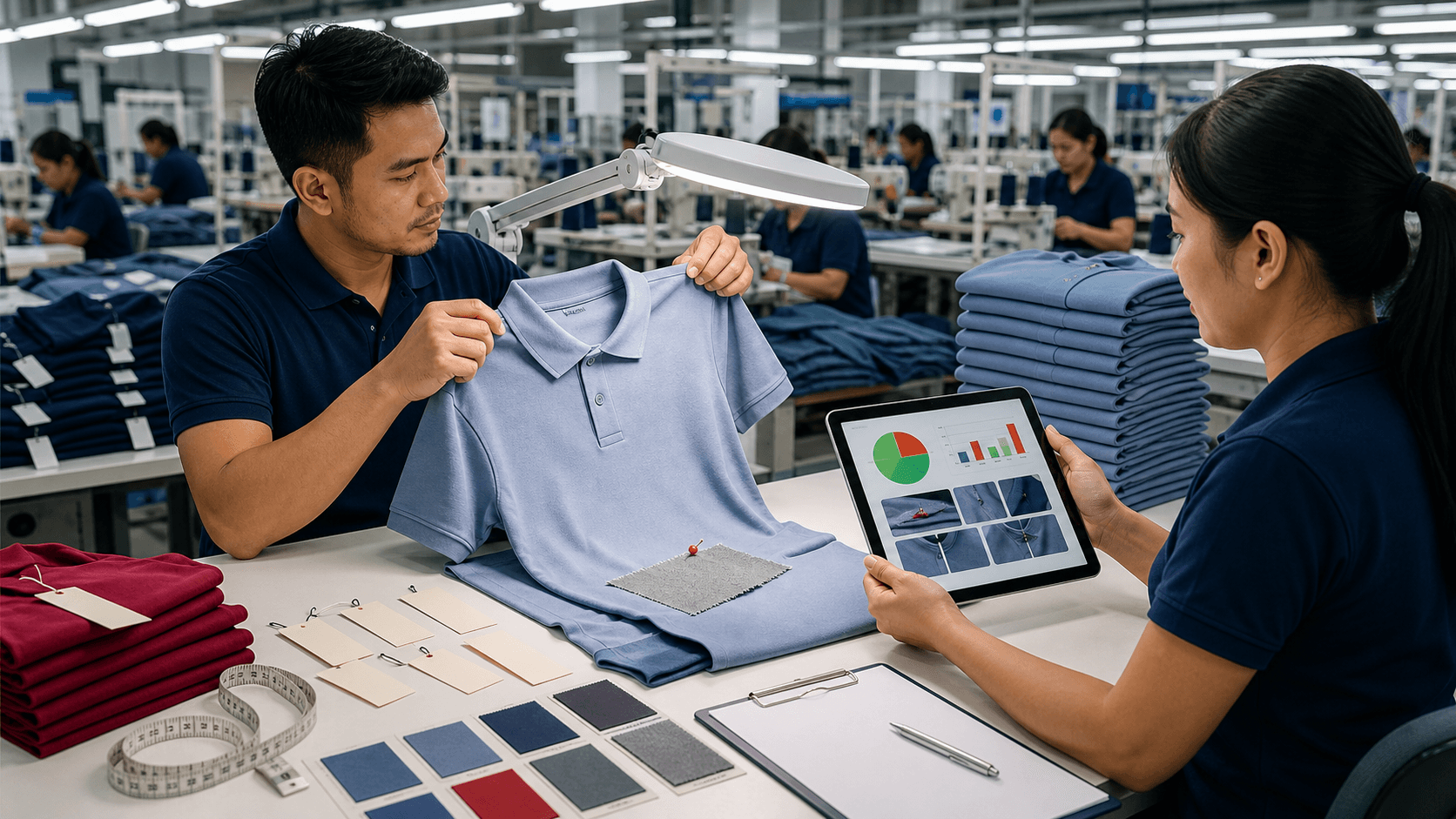
Garment measurement tracking keeps small fit changes from turning into a shipment-wide problem. A sample may pass in one size while other sizes drift outside the approved specification, leading to fit complaints, rework, rejected shipments, and delayed seasonal deliveries.
We recommend tracking measurements throughout production, not treating them as a final inspection checkbox. When every factory and inspector follows the same process, you can see where a size range starts to move and address it before volume production is affected.
TLDR
- A passing sample in one size does not confirm the full size range meets spec.
- Inline measurement checks help you find drift before the issue spreads across the size run.
- ISO 2859-1 final audits verify the finished lot; corrective action plans belong to inline inspections, where there is still time to act.
Build a Measurement Standard for Every Size Range
Each style should begin with an approved measurement specification. We recommend defining the same points of measure, grade rules, tolerances, and sizes to inspect for every production source.
A shared standard keeps measurement methods consistent across factories, inspectors, and production stages. InQualityIris, the buyer's own measurement chart — Excel, CSV or PDF — is imported once as a template identified by buyer and spec code, then reused across every PO and style that chart covers. Recording actual measurements, rather than a pass or fail result alone, gives you data you can compare across orders and factories.
Your specification should clearly cover:
- Points of measure and how each point is checked
- Allowed tolerances for each size
- Grade rules between sizes
- Required sizes and production stages for inspection
Late September can be especially busy, with spring assortments moving toward production while holiday and cold-weather programs are being closed out. Early measurement controls help us protect fit consistency before production volume accelerates.
Catch Measurement Drift During Inline Inspections
Inline garment measurement tracking gives us time to act while issues can still be corrected. Instead of reviewing each size as an isolated result, we look across the size range for patterns.
Common drift can include chest width increasing too much in larger sizes, inseams shrinking after wash, or sleeve lengths moving outside tolerance after finishing. Every actual value is compared per size and colour against the tolerance in the PO's locked measurement spec — the inspector measures against the buyer's approved chart, not a spec chosen on the day. Production date, line, lot and operation then sit on top as trend dimensions, so the records show whether a problem is tied to one operation, one size, or one production line.
With QualityIris, we centralize inline inspection results, measurement records, and defect evidence in one digital apparel quality assurance workflow. That gives your team documented findings without relying on disconnected spreadsheets or paper reports — theinline inspection report format shows exactly what buyers receive.
Validate Results in ISO 2859-1 Final Audits
ISO 2859-1 final audits verify shipment readiness through defined sampling plans. We recommend recording measurement results alongside workmanship defects and packing findings, so the audit provides a fuller view of fit risk across the inspected size range.
Repeated failures deserve review by point of measure, size, and production source. This helps us separate a one-off variance from a pattern that may affect units beyond the inspection sample. Standardized digital audit records also give brands, manufacturers, importers, and agent offices a consistent way to compare orders and factories — and theAQL savings calculator shows what that consistency is worth when switching rules move a supplier between normal, tightened and reduced inspection.
Turn Measurement Failures Into Corrective Action Plans
A failed measurement at inline should lead to a documented root-cause review, not just a rejected result. We connect the evidence to possible causes, including cutting inaccuracies, sewing allowances, wash shrinkage, incorrect patterns, or finishing conditions.
Iris AI drafts the corrective action plan from that inspection evidence — root cause, action items with priority, recheck areas, and a suggested re-inspection date — and the inspector reviews, edits and signs before anything is sent. When plans are based on actual measurement and inspection data, factory communication becomes clearer, and verification happens at the next inline inspection against the plan's recheck areas.
Standardize Your Next Size-Range Inspection Process
Reliable garment measurement tracking depends on one shared process for specifications, inline checks, ISO 2859-1 final audits, defect evidence, and corrective action plans. Consistent records turn isolated inspection results into usable information for preventing the same fit issue in the next production run.
Standardize Measurement Control Across Every Size
QualityIris gives your team one digital workflow for specifications, inline checks, final audits, defect evidence, and corrective actions. It costs $69 per active inspector per month (or $690/year) — buyer and factory accounts are free — with a 14-day free trial and no credit card required. Try theinteractive demo or download asample report to see how teams document tolerances, compare results per size and colour against the approved spec, and build clear CAPs from inspection findings.