Raise First-Pass Yield Before Shipment Pressure Builds
First-pass yield affects how smoothly production moves from the sewing floor to shipment. When more garments pass the first inspection, teams see less rework, steadier delivery performance, and lower quality costs.
Peak shipment windows—especially seasonal line rollouts and holiday cutoffs—put extra pressure on QA teams to balance speed with strict compliance.
TLDR: First-pass yield is the share of garments that pass inspection without rework or reinspection. Improve it through consistent inline checks, tolerance monitoring, documented defect evidence, ISO 2859-1 final audits, and inline corrective actions that eliminate root causes. QualityIris gives internal apparel QA teams one self-serve platform to manage that entire workflow.
Understanding First-Pass Yield
Define First-Pass Yield for Apparel Production Quality
First-pass yield is the percentage of inspected units that meet buyer requirements on the very first inspection attempt. A unit needing sewing repair, stain cleaning, trim replacement, or re-inspection does not count as a first-pass success.
First-pass yield = (units passing first inspection ÷ total units inspected) × 100
This measure exposes preventable losses early, before they escalate into shipment delays, overtime labor, or airfreight costs. A production lot might eventually pass its final audit, but only after expensive manual sorting and rework that quietly erodes factory margins.
Tracking yield across production lines, styles, operations, and sewing machines highlights repeat failure patterns before they become systemic.
Identifying Inline Yield Loss
Find Yield Loss During Inline Garment Checks
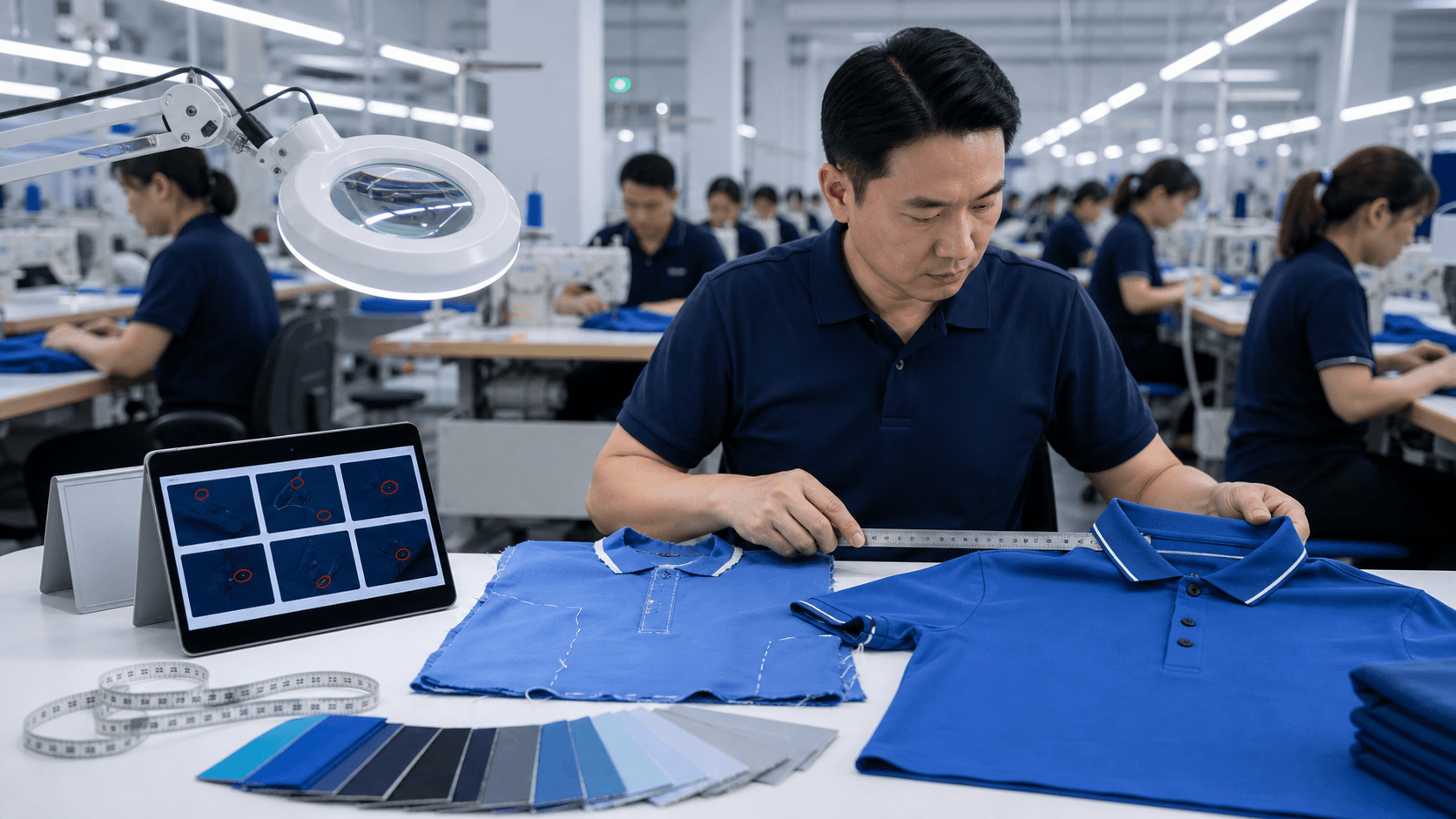
Inline garment checks find defects while production is running and the line can still adjust. They uncover workmanship, construction, labeling, and aesthetic flaws before hundreds of dozens are affected.
Common first-pass yield blockers include:
- Inconsistent stitching, broken stitches, or open seam defects
- Skipped operations and incorrect trims or labels
- Shade variation, fabric flaws, and puckering
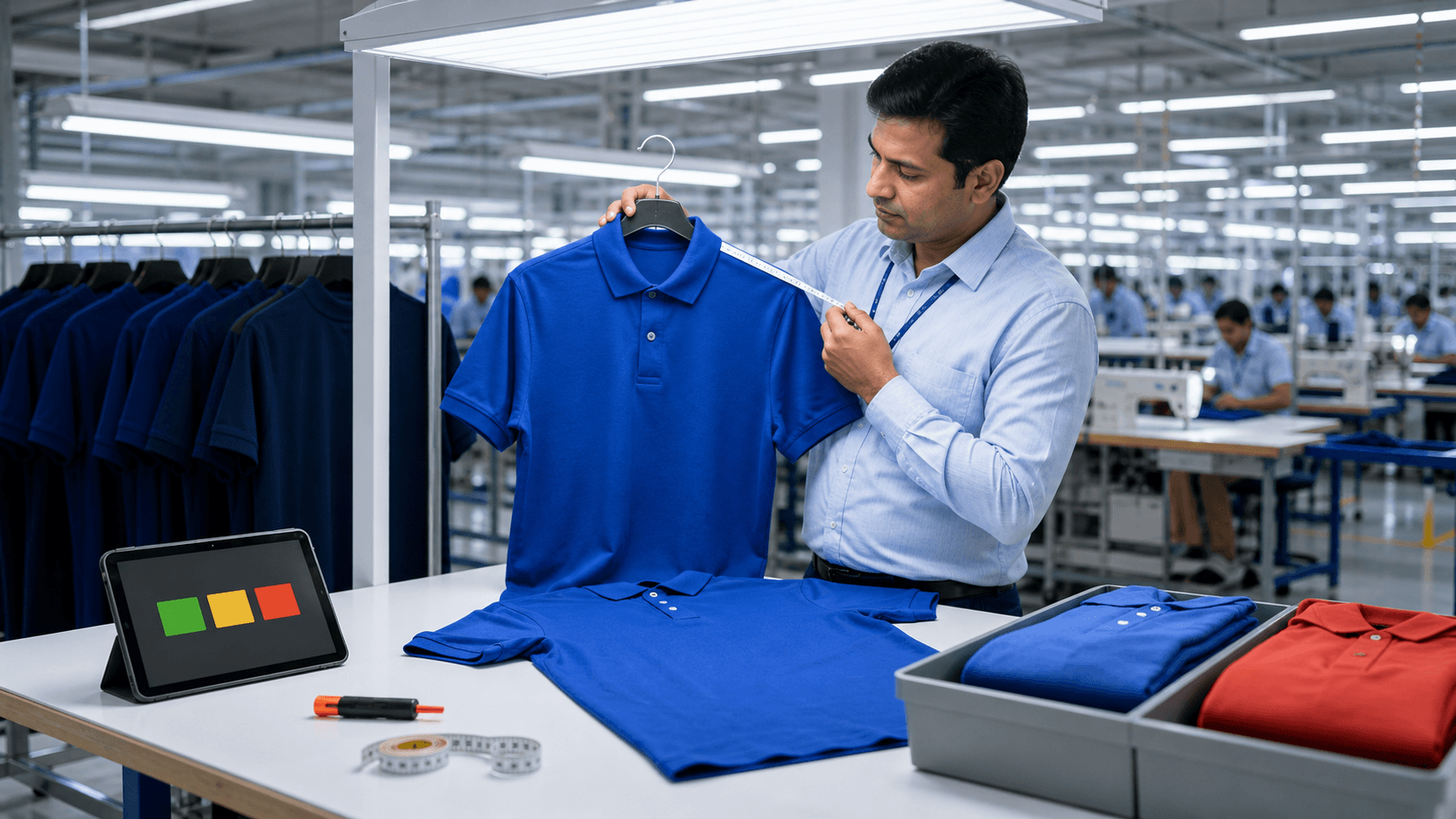
- Measurement drift outside approved buyer tolerances
Measurement tracking is critical because dimensional drift often moves gradually across bundles. Recording structured defect descriptions, the affected sewing operation, specific machines, quantities checked, and photo evidence gives teams instant visibility. QualityIris replaces paper slips, chat messages, and spreadsheets with structured floor-level data.
Validating Final Shipment Quality
Use ISO 2859-1 Audits to Validate Shipment Readiness
An ISO 2859-1 final audit evaluates packed, finished goods from a defined shipment lot using an agreed AQL sampling plan and acceptance criteria. Its role is strictly complementary to inline inspection:
- Inline checks prevent and correct defects during active production.
- Final audits determine whether the finished, cased lot meets acceptance standards before handover.
Useful final audit records include:
- Lot size and AQL sample size
- Quantities inspected and dimensional compliance
- Workmanship defect counts and photo evidence
- Immutable Pass, Fail, or Pending verdict
QualityIris standardizes these records and keeps complete audit histories accessible for buyers and internal review.
Correcting Root Causes Fast
Turn Inline Defect Evidence Into Root-Cause Corrective Actions
First-pass yield steadily improves only when QA and line supervisors address root conditions rather than simply mending failed garments. In QualityIris, Corrective Action Plans (CAP) are anchored directly to inline inspections while production is active.
A practical inline corrective action plan should:
- Define the discrepancy with attached photo evidence
- Identify the likely root cause (operator technique, folder setup, needle gauge, incoming fabric)
- Establish containment actions for current floor inventory
- Verify subsequent inline rounds to confirm non-recurrence
Iris AI helps turn documented inline inspection findings into structured, actionable corrective action plans in seconds.
Improve Quality Before Shipment
Standardize Checks and Strengthen Quality Decisions
Start a fully functional 14-day free trial to run consistent inline checks, ISO 2859-1 final audits, and measurement records in one workflow. Use our apparel production quality software to track machine-level first-pass yield, monitor measurement drift, and build AI-assisted corrective action plans. Explore our interactive demo or get started right away at qualityiris.com.