TLDR
- Inline defect and measurement history helps qualify factories and match them to the right styles.
- Inline inspections and measurement-drift monitoring surface line risk before defects spread.
- Risk-based ISO 2859-1 final-audit controls adjust sampling to supplier, product, and line performance.
- AI-driven CAPs target recurring defects and track whether corrective actions improve results.
AI-Ready Supplier Onboarding That Protects Peak-Season OTIF
Peak-season calendars are tight. Holiday, back-to-school, and capsule drops leave almost no room for trial-and-error with new factories or untested lines.
If early lots ship off-quality, you are already late and over budget. AI-assisted onboarding compresses capability checks from weeks of emails, spreadsheets, and slow samples into a few focused days.
QualityIris centralizes apparel supplier quality management in one workflow. Onboarding, inline checks, ISO 2859-1 final audits, defect tracking, measurement drift analysis, and AI-driven corrective action plans (CAPs) run as a continuous loop.
You act on live line data instead of last season’s PDF reports. Risk is visible before large volumes hit production.
Mapping Supplier Capability Before You Place the First PO
Paper-based factory approvals are not enough. You need a shared, data-backed view of what each supplier can run well and where they are likely to fail.
QualityIris builds an AI-driven supplier capability fingerprint using:
- Past audit and inspection results
- Style complexity and construction details
- Fabric categories and blends
- Size runs and measurement tolerance history
- Known defect profiles by product type
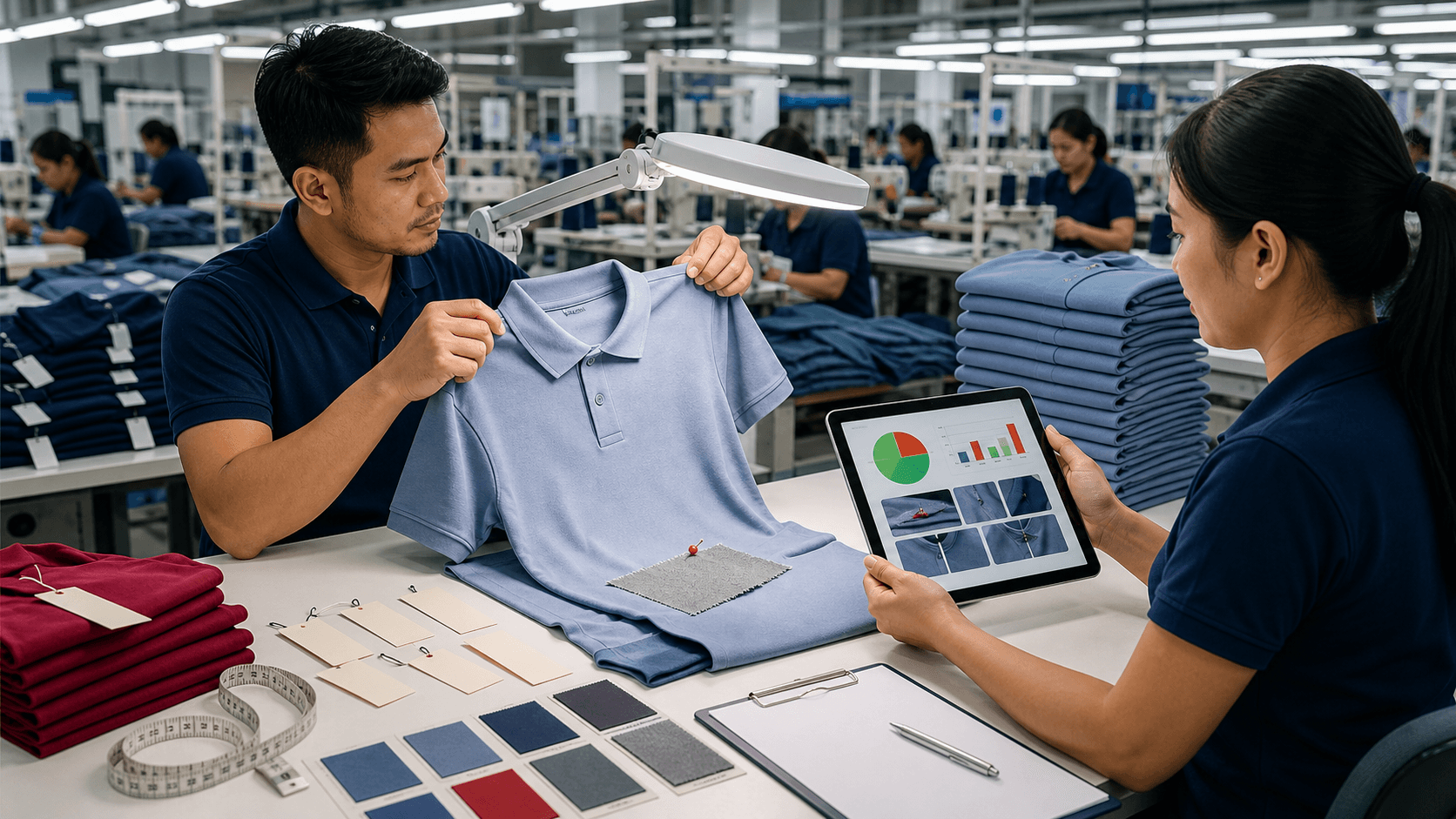
Inspectors record findings from sample photos, pre-production samples and pilot runs, and Iris summarises the pattern across them. The models check stitch consistency, seam integrity, print alignment, shading, and other visible quality points, then pair them with measurement checks to assess sizing stability.
These scores roll into structured supplier profiles. Merchandising sees which factories can handle complex fashion styles, sourcing sees safe capacity, and quality teams see where to apply tighter inline control.
Using Production and Defect History to Set Dynamic ISO
Static ISO plans break when suppliers add new lines, staff, or machines. A plan that worked last season may fail as soon as product mix or fabric changes.
QualityIris supports dynamic ISO 2859-1 plans by ingesting live operational data:
- Inline inspection pass and fail rates
- Rolling defect mixes by category
- Measurement drift across sizes, days, and lines
- Rework and re-inspection results
QualityIris tracks inspection history per factory, buyer and AQL pair and recommends the ISO 2859-1 severity — normal, tightened or reduced — before each audit. The recommendation is advisory: the inspector may override it with a written reason, and the reason is printed on the buyer-facing PDF. Reduced inspection is never automatic. Stable lines with low, consistent defects move to lighter sampling to avoid over-inspection.
New or volatile styles run on stricter ISO and higher inspection frequency until performance stabilizes. Inspection effort tracks real risk instead of a fixed, generic plan.
Inline Evidence That Surfaces Risk Early
Most quality issues start as small misses on the line. Inline detection prevents full-batch rework and late surprises at final audit.
During inline inspections, inspectors use QualityIris to capture photos and critical measurements at the workstation. Computer vision analyzes the images and flags repeating visual defects such as shading, skew, print bleed, broken stitches, seam grin, and uneven hems.
The platform also captures and monitors measurement data in real time. Measurement trends by size, lot and line appear on the submitted report and on the dashboard, so teams can pause cutting, retrain or adjust a machine before large volumes are affected.
All data feeds live dashboards across quality, production, and sourcing. Teams see which suppliers and lines are high, medium, or low risk today, not last quarter.
From Defect Patterns to AI-Driven Corrective Action Plans
Individual defects matter less than recurring patterns. Patterns reveal where processes, machines, or operators need correction.
QualityIris clusters defects across styles, shifts, machines, and lines. It highlights signals such as:
- Needle and thread issues repeating by machine or style
- Tension problems tied to specific operators or settings
- Cutting and marker errors linked to certain fabrics
- Printing or embellishment defects tied to particular lines
Once patterns are clear, the platform proposes targeted CAPs. Examples include extra inline checkpoints on a high-risk seam, focused audits on a process, or revised tolerances in known problem areas.
Suppliers that show sustained defect and drift reduction earn lighter ISO plans and fewer inspections. Chronic issues trigger escalated monitoring with stricter sampling until performance improves.
Turning Supplier Scoring Into a Continuous Quality Advantage
One-off factory approvals do not protect peak-season OTIF. Continuous inspection history — inline reports, ISO 2859-1 audits, defect and measurement data — keeps orders stable when calendars and product mixes change.
A practical approach looks like this:
- Standardize digital inline inspections so data is complete and comparable
- Bring key suppliers into a single QualityIris workflow
- Use AI-driven capability scoring to guide order placement and style pairing
- Let dynamic ISO and live dashboards keep risk controlled as production shifts
QualityIris focuses on inline-first digital apparel quality assurance and inspection management. When onboarding, capability scoring, inline checks, ISO 2859-1 final audits, defect tracking, measurement drift analysis, and AI-driven CAPs work together, you reduce surprises at final audit and improve on-time, in-full delivery rates.
Strengthen Your Apparel Supply Chain With Data-Driven Quality Control
If you are ready to move beyond spreadsheets and reactive firefighting, our apparel supplier quality management tools give you the visibility and control you need. At QualityIris, we help you track supplier performance, prevent recurring defects, and standardize quality across every factory. Let us show you how quickly you can turn fragmented data into clear, actionable insights. Have questions about fit for your team or processes? Contact us and we will walk you through next steps.